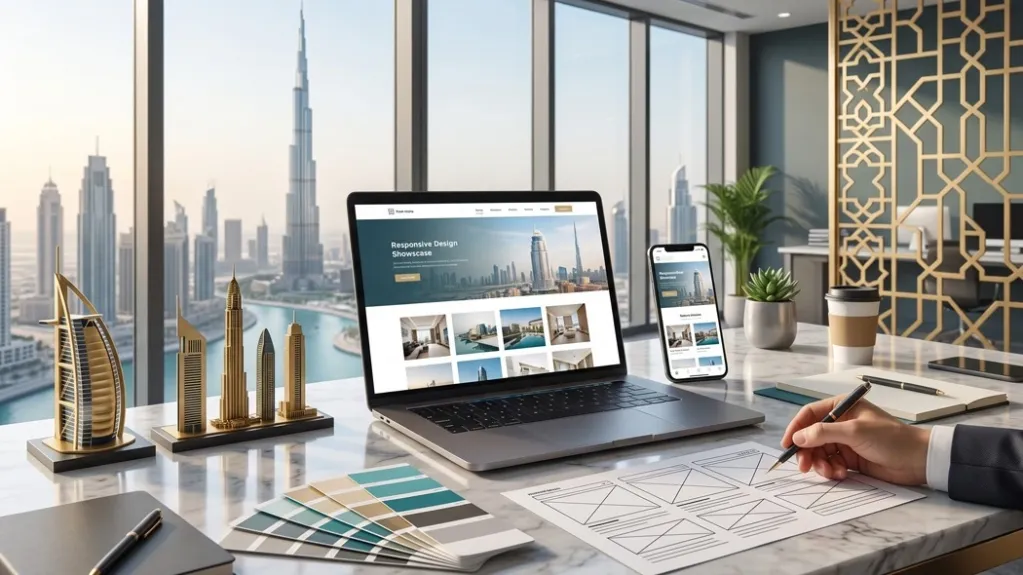
10 Web Design Trends Dominating Dubai Businesses in 2026
Dubai's businesses operate in a market where appearances matter as much as service. A tired-looking website can undo months of brand building in seconds, especially when customers are used to seeing polish everywhere they look in this city. Tourism, real estate, and retail are all feeling the same pressure to look sharp and load quickly at once. As a leading web design company in Dubai, GL Infotech has recognized this shift playing out across almost every client brief that comes in.
Here's what's actually showing up on Dubai websites this year.
1. Block-based homepages
Big, striking headlines are taking the place of hero photography. Hotels, property firms, and retail brands are using this to make a strong first impression before the visitor even scrolls.
In a Nutshell
Dubai's websites are evolving fast, but the businesses getting it right are chasing more than trends. From block-based layouts to fast-loading builds, the direction is toward sites that look sharp and still work well for the person using them.
3. Softer, flowing shapes
The sharp grid lines of previous years are giving way to curves and organic forms. Luxury and lifestyle brands are picking this up to feel less like a corporate template and more like a real brand.
4. Content that adapts to the visitor
Some sites now shift what they show depending on who's browsing and where they came from. A property site can surface a relevant listing straight away instead of making the visitor dig for it.
5. Loud, saturated colour
Neon tones and sharp colour contrasts are back, especially on beauty, fitness, and youth-focused sites. It's a clear break from the muted palettes that were common a few years back.
Good design is actually a lot harder to notice than poor design.- Don Norman, cognitive scientist and design researcher.
6. Products you can explore on screen
Jewellers, opticians, and property developers are letting people rotate a product or move through a space virtually. For expensive purchases, that extra look builds confidence before the sale. Leading web design companies in Dubai are fusing these interactive features as part of modern websites.
7. Sites built to load fast
Since most browsing in Dubai happens on a phone, many sites are stripping out heavy plugins and scripts. A page that loads a beat too slow still costs a visitor.
8. Small moments of motion
The web pages are beginning to have elements that make use of hover, subtle scrolling, and responsive buttons. Used effectively, they will help give the web page its character.
“If the design works as well without a certain design element, kill it.”- Jakob Nielsen, usability expert and co-founder, Nielsen Norman Group.
9. Design that works for everyone
Legible fonts, strong contrast, and simple navigation are standard expectations now, not extras. That matters in a city where visitors read comfortably in both Arabic and English.
10. A touch of nostalgia
Grainy effects, old-fashioned photography techniques, and magazine layout design styles have been seen on fashion and lifestyle websites, thus creating a hand-made look rather than a mass-produced one.
Final Thoughts
Dubai tends to pick up global design shifts early, and this year is no exception. What ties these trends together is balance: a website needs to stand out, but it still has to work. Most strong sites borrow from two or three of these ideas rather than trying to squeeze in all ten. The businesses that get this mix right are the ones people remember.