 >Digital marketing> How Personalized Marketing Strategies Help Businesses Attract and Retain More Customers
How Personalized Marketing Strategies Help Businesses Attract and Retain More Customers
Think about how you shop. You might spend ten minutes looking at a product, compare it with two others, read a few reviews and still decide to wait. A week later, you come across a recommendation that answers the very question you had in mind. Suddenly, you are interested again. It happens more often than we realise. People do not always buy when a business expects them to, and they do not all respond to the same things. At GL Infotech, we understand how important it is for businesses to recognise these differences and communicate with customers in ways that matter to them. This is where personalised marketing makes a difference.
In a Nutshell
What if a customer is already interested in your business but simply hasn't found the right reason to make a purchase? The difference between losing that customer and winning their attention might lie in how well you understand what they are looking for. Could personalised marketing be the missing link?
Every Customer Has a Different Reason for Buying
Some people visit a website because they already know what they want. Others are just looking around, comparing prices or trying to understand whether a product is worth buying. Existing customers may have completely different expectations from someone discovering the business for the first time.
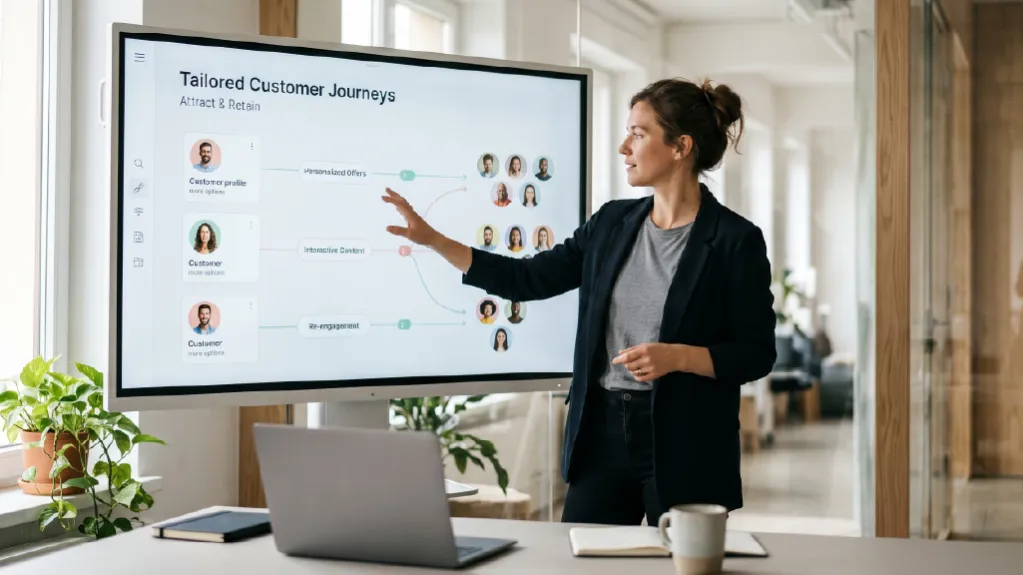
Nevertheless, businesses usually flood all of them with similar promotional emails and advertisements. Personalized marketing is definitely a much better option in such a situation. The company will be able to use the information about interests of customers, their previous purchases, browsing websites in order to make communication more personalized. When a visitor who visits for the first time needs some general information about products, then an old client may be interested in a free product or some offer. What has changed is the stage of the buying journey each customer has reached.
What Customer Behaviour Can Tell a Business
Someone who frequently visits the same page, clicks on the same email, or purchases products from the same category could give very useful information for the company. This person is likely giving an idea of what he or she likes, thinks about, and might need. Based on this information, companies can segment customers according to their preferences and launch campaigns.
For instance, an online clothes store could recommend products based on the history of what the consumer has purchased before. Digital marketers could also provide information about SEO if the person is interested in SEO services from them. Relevant advertisement through email and other channels can go a long way for businesses.
This is far more useful than promoting every product to everyone. But getting someone's attention is only part of the job. What really matters is whether that interest leads to a purchase.
The aim of marketing is to know and understand the customer so well the product or service fits him and sells itself.
Peter Drucker – Management thinker
Helping Interested Customers Make a Decision
It happens to all of us. We add a product to our online shopping cart, get distracted or decide to think it over, and eventually forget about it.The company can utilize personalized email campaigns to get back into the consumer's mind and remind him about that particular product. Also, it might provide some extra information, which will solve his problem or answer his question.
The same logic applies to service products too. A person who needs website development would have to check out a related work sample, know about the services provided or understand the whole process before making any enquiry. It can be very helpful if you provide him or her with such information.
Such actions can increase the possibility of conversion and can help companies spend less money on advertising that reaches uninterested people. And when a customer buys your product, there is one more opportunity that should not be ignored.
How Personalised Marketing Helps Businesses
When businesses understand what their customers are looking for, they can make their marketing more effective in several ways:
- Getting the right candidates: Customized campaigns will help the business market their products/services to people who are likely to be interested in them.
- Getting the right audience: With customized campaigns, businesses will be able to attract the right kinds of audiences who might be interested in their products/services.
- Improving interaction: The consumers will be more likely to open emails and also click on the advertisements as well as respond to messages that interest them.
- Creating sales opportunities: Relevant recommendations and follow-ups can motivate individuals to make purchases.
- Reduce marketing expenses: Marketing expenses can be reduced by marketing specific products to specific markets instead of marketing the same product to everybody.
- Repurchasing encouragement: Recommending products and offering discounts will ensure that customers are reminded of their other requirements.
- Customer loyalty: Customer-oriented communication will make people feel special and bring them back again.
This highlights the manner in which personalized marketing could facilitate customer acquisition and retention. However, maintaining interest in the customer is not necessarily dependent upon discounts or promotions.
In a Nutshell
A customer making their first purchase is only one part of the story. What makes them return to your business when countless other options are available? The answer may have more to do with how you communicate with them after the sale than you think.
Giving Customers a Reason to Return
Suppose you are a frequent shopper of certain stores. For example, those stores might provide goods that appeal to you, understand your likes and dislikes, or make you aware of the products you are interested in.
Companies can also find similar reasons to engage their customers. For an online store, one can suggest items related to earlier purchases; a grocery company can notify people about reorders; and a service provider can notify someone about anything related to their requirements. It will all depend on how to preserve a relationship beyond the first order through personalised emails, loyalty rewards, and so forth.
Obviously, there is nothing good in receiving promotions every day or notifications about services one does not want to use. There should be caution taken on how often and relevant this form of communication is and how the data being offered by the customer is being used. This means that companies need to be of value and not be annoying. It is the difference between thoughtful personalisation and marketing communication.
We see our customers as invited guests to a party, and we are the hosts. It’s our job every day to make every important aspect of the customer experience a little bit better.
Jeff Bezos—Founder of Amazon
Making Marketing More Relevant
At its simplest, personalised marketing means understanding that customers are people with different needs, preferences and reasons for buying. It helps businesses communicate more clearly, reach relevant audiences, improve the chances of making sales and encourage existing customers to return.
For a business, the benefits go beyond getting more website visits or advertising clicks. It can mean fewer irrelevant campaigns, better use of marketing budgets, more repeat purchases and stronger customer relationships. And none of this necessarily begins with a complicated campaign. Sometimes, it begins with noticing what a customer is interested in and giving them information that actually helps. That small change can make a customer look at a business differently, not just once, but the next time they need something too.